Chondromalacia Patella (Patellofemoral Syndrome)
Written by: Dr. Popovitz.
Board-Certified Orthopedic Surgeon | Fellowship-Trained Sports Medicine, NYU Langone Medical Center | FAAOS
Co-Founder, NY Bone & Joint Specialists | Lenox Hill Hospital - Northwell Health
Recognized: New York Magazine Best Doctor | New York Times Super Doctor | IAOS Leading Physician of the World | IAOS Top Orthopedic Surgeon in New York
Date Published: January 18, 2019
Last Updated: September 22, 2025
Last Medically Reviewed: September 22, 2025
This page has been written and reviewed by a fellowship-trained, board-certified orthopedic surgeon with over 20 years of clinical experience. All clinical claims are supported by peer-reviewed literature and current AAOS and AOSSM guidelines. See References section below.
Book a consultation
Prompt Appointments Available
Upper East Side: 1198 Third Ave | Midtown: 425 Madison Ave
Surgery performed at Lenox Hill Hospital - Northwell Health
WHAT IS CHONDROMALACIA OR RUNNER’S KNEE?
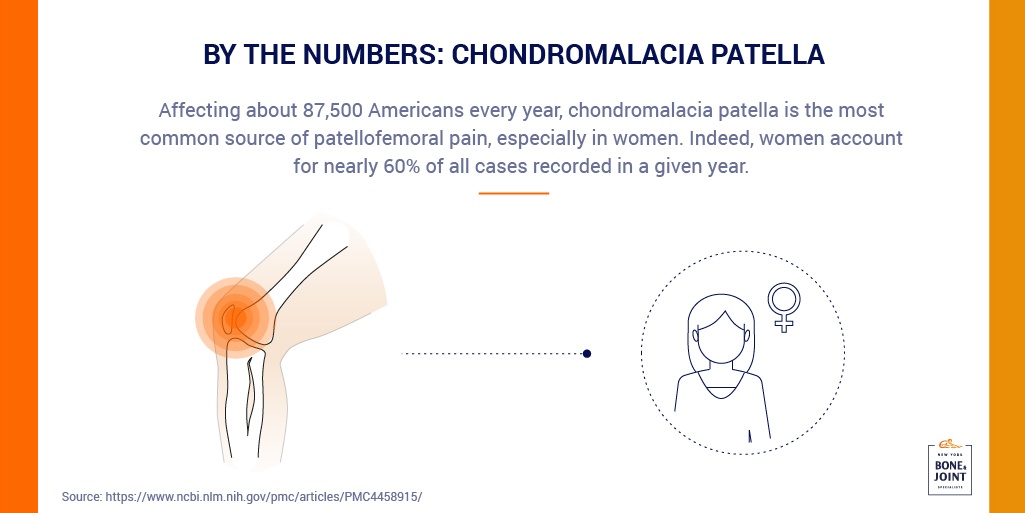
Patellar chondromalacia, often referred to as patellofemoral pain syndrome or runner’s knee, is a condition marked by pain in the front of the knee. While anyone can experience this condition, it is most common in runners and athletes.
Often, this condition is caused by a poor alignment of the patella (kneecap) as it slides over the femur, or thigh bone. Generally, the patella is pulled in one diretion and out of proper alignment due to the surrounding muscles either being too tight or too loose. Physical activities like running that affect these muscles can often exacerbate the condition.
RUNNER’S KNEE SYMPTOMS
Common symptoms of chondromalacia patella or patellofemoral syndrome include a dull, aching pain in the front of the knee accompanied by moderate to heavy swelling. Some patients may also experience a grinding or clicking sensation when bending and straightening the affected knee. The pain can be further aggravated by strenuous exercise, walking up or down stairs, or sitting for extended periods of time.
RUNNER’S KNEE TREATMENT
Chondromalacia patella or patellofemoral syndrome often responds favorably to more conservative treatments. Symptoms generally subside with some combination of rest, anti-inflammatory medication, and a physical therapy program that engages the muscles surrounding the knees and hips. Wearing a brace around the knee, taping it, and regularly icing it will also relieve pain.
One exercise that your physical therapist may recommend is to strengthen an important part of the quadriceps muscle called the VMO:
Level 1:
Sit on the edge of a chair. Bend one knee back in under the chair. Stretch the other leg in front of you with your knee straight. Now, place your fingertips on the thigh muscle just above the inside of your knee and the other hand on the thigh muscle just below the outside of your hip. Contract your thigh muscle so that the inside tightens first and the outside is as relaxed as possible. Hold for five seconds. Relax and repeat. When this becomes easy, move on to level 2
Level 2:
Repeat level 1, but this time with your knee bent. Place your fingertips on the thigh muscle just above the inside of your knee and the other hand on the thigh muscle just below the outside of your hip. Contract your thigh muscle so that the inside tightens first and the outside is as relaxed as possible. Hold for 5 seconds. Relax and repeat.
CHONDROMALACIA PATELLA SURGERY & RECOVERY
Surgery
Surgery is rarely perfomed for chondromalacia patella or patellofemoral syndrome. One circumstance in which it would be necessary is if the cartilage lining the bone flakes or cracks off and causes buckling or locking as it rolls around the joint. Another indication that surgery might be required is if the knee cap is so unstable that it repeatedly dislocates. In this case, the knee cap can be realigned by reconstructing a stabilizing ligament, or the bone can be cut and aligned to avoid future dislocations.
Recovery Time
Neither the condition of chondromalacia patella nor the milder patellofemoral syndrome can “heal,” but pain can be managed with physical therapy and exercises performed at home. By undertaking a regular exercise program, pain should lessen within six to eight weeks and you will likely avoid future flareups.
_________________________________
EXPERIENCING PAIN? DO YOU HAVE AN INJURY?
Our Specialists are here to help.
Book an appointment with NYC’s best orthopedic specialists to discuss your condition. Fill out the form below and you will receive a call from our office within 5-10 minutes. We’ll book an appointment at a time and location that work for you, and send you a reminder by email.
FAQs: Chondromalacia Patella
What is the difference between chondromalacia patella and patellofemoral pain syndrome?
Chondromalacia refers specifically to softening or damage of the cartilage under the kneecap (patella), while patellofemoral pain syndrome (PFPS) is a broader term that includes pain in the front of the knee whether or not cartilage damage is visible. PFPS may develop from overuse, alignment issues, or muscle imbalance.
What causes chondromalacia patella / PFPS?
Several factors can lead to chondromalacia or PFPS: repetitive stress on the knee from activities like running or jumping; misalignment of the kneecap; tightness or weakness in the muscles around the knee and hip; biomechanical issues like flat feet or improper footwear; prior knee injury or trauma.
How is chondromalacia patella diagnosed?
Diagnosis typically begins with a medical history and physical exam, assessing symptoms, knee movement, alignment, and pain during certain activities (stairs, squatting). Imaging tests (X-ray, MRI) may be needed if conservative treatment fails or to rule out other conditions.
What treatments help, and how long does recovery usually take?
Initial treatment is generally conservative: rest, ice, activity modification, physical therapy focused on improving muscle strength, flexibility, and correct tracking of the kneecap. Many patients start to see improvement over 4-6 weeks with consistent therapy. Full recovery depends on the severity, patient compliance, and correction of contributing factors; in more persistent cases, more intensive physical therapy or surgical options might be considered.
Doctors Seeing Patients for Knee Conditions:






Medically Reviewed by Dr. Popovitz.
You can book your appointment with New York Bone & Joint online by submitting the appointment request form here:
Book an appointmentOur Locations
-
Upper East Side: Full Service Orthopedic Center & Walk-In
1198 3rd Avenue, Between 69th and 70th Street New York, NY 10021Physician appointments: Mon–Fri 9am–5:30pm, Sat 8:30am–4:30pm
Physical therapy: Mon–Fri 7am–7pm, Sat 8am–2pmPhone: (212) 759-4553 -

Orthopedic Doctor Midtown Manhattan NYC — New York Bone & Joint Specialists
425 Madison Ave, Suite 200 (second floor) New York, NY 10017 (corner of East 49th Street)Physician appointments: Mon–Fri 8:00 am–6:00 pm
Physical therapy: Mon–Fri 7 am–7 pm, Sat 8 am–2 pmPhone: (212) 759-4553 -

Orthopedic Doctor Upper East Side NYC — New York Bone & Joint Specialists
130 E 67th St New York, NY 10065Physician appointments: Mon–Fri 8:00am–6pm, Sat 8:30am–4:30pm
Physical therapy: Mon–Fri 7am–7pm, Sat 8am–2pmPhone: (212) 759-4553