Fractures & Fracture Care
Written by: Dr. Popovitz.
Board-Certified Orthopedic Surgeon | Fellowship-Trained Sports Medicine, NYU Langone Medical Center | FAAOS
Co-Founder, NY Bone & Joint Specialists | Lenox Hill Hospital - Northwell Health
Recognized: New York Magazine Best Doctor | New York Times Super Doctor | IAOS Leading Physician of the World | IAOS Top Orthopedic Surgeon in New York
Date Published: October 4, 2018
Last Updated: March 13, 2025
Last Medically Reviewed: March 13, 2025
This page has been written and reviewed by a fellowship-trained, board-certified orthopedic surgeon with over 20 years of clinical experience. All clinical claims are supported by peer-reviewed literature and current AAOS and AOSSM guidelines. See References section below.
Book a consultation
Prompt Appointments Available
Upper East Side: 1198 Third Ave | Midtown: 425 Madison Ave
Surgery performed at Lenox Hill Hospital - Northwell Health
FRACTURES & TRAUMA
The word “fracture” implies a broken bone. A bone may get fractured completely or partially and it is commonly caused from trauma due to fall, motor vehicle accident or sports. Thinning of the bone due to osteoporosis in the elderly can cause the bone to break easily. Overuse injuries are a common cause of stress fractures in athletes.
FRACTURE HEALING
Our body reacts to a fracture by protecting the injured area with a blood clot and callus or fibrous tissue. Bone cells begin forming on the either side of the fracture line. These cells grow towards each other and thus close the fracture.
MEDICAL THERAPY
The objective of early fracture management is to control bleeding, prevent ischemic injury (bone death) and to remove sources of infection such as foreign bodies and dead tissues. The next step in fracture management is the reduction of the fracture and its maintenance.
It is important to ensure that the involved part of the body returns to its function after the fracture heals. To achieve this, maintenance of fracture reduction with immobilization technique is done by either non-operative or surgical method.
Non-operative (closed) therapy comprises of casting and traction (skin and skeletal traction).
CASTING
Closed reduction is done for any fracture that is displaced, shortened, or angulated. Splints and casts made up of fiberglass or plaster of Paris material are used to immobilize the limb.
TRACTION
Traction method is used for the management of fractures and dislocations that cannot be treated by casting. There are two methods of traction, namely skin traction and skeletal traction.
Skin traction involves attachment of traction tapes to the skin of the limb segment below the fracture. In skeletal traction, a pin is inserted through the bone distal to the fracture. Weights will be applied to this pin, and the patient is placed in an apparatus that facilitates traction. This method is most commonly used for fractures of the thighbone.
SURGICAL THERAPY
Open Reduction and Internal Fixation (ORIF):
This is a surgical procedure in which the fracture site is adequately exposed and reduction of fracture is done. Internal fixation is done with devices such as Kirschner wires, plates and screws, and intramedullary nails.
EXTERNAL FIXATION
External fixation is a procedure in which the fracture stabilization is done at a distance from the site of fracture. It helps to maintain bone length and alignment without casting.
External fixation is performed in the following conditions:
- Open fractures with soft tissue involvement
- Burns and soft tissue injuries
- Pelvic fractures
- Comminuted and unstable fractures
- Fractures having bony deficits
- Limb-lengthening procedures
- Fractures with infection or nonunion
REHABILITATION
Fractures may take several weeks to months to heal completely. You should limit your activities even after the removal of cast or brace so that the bone become solid enough to bear the stress. A rehabilitation program involves exercises and gradual increase in activity levels until the process of healing is complete.
_________________________________
EXPERIENCING PAIN? DO YOU HAVE AN INJURY?
Our Specialists are here to help.
Book an appointment with NYC’s best orthopedic specialists to discuss your condition. Fill out the form below and you will receive a call from our office within 5-10 minutes. We’ll book an appointment at a time and location that work for you, and send you a reminder by email.
Doctors Seeing Patients for Foot Conditions:

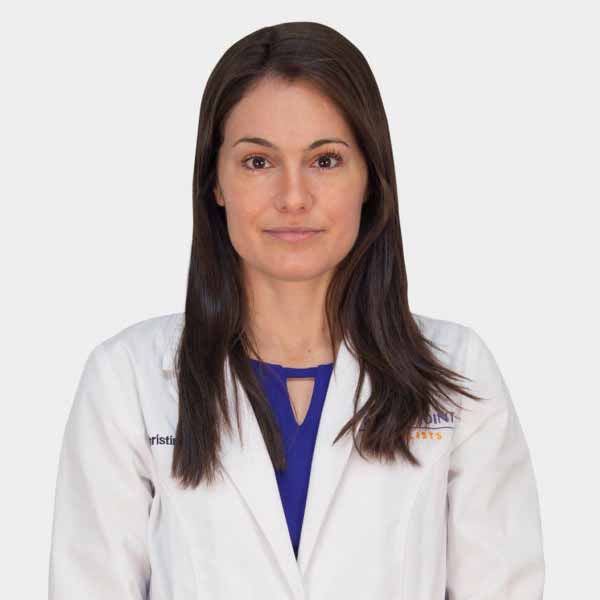





Medically Reviewed by Dr. Popovitz.
You can book your appointment with New York Bone & Joint online by submitting the appointment request form here:
Book an appointmentOur Locations
-
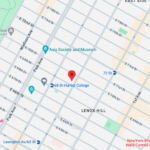
Upper East Side: Full Service Orthopedic Center & Walk-In
1198 3rd Avenue, Between 69th and 70th Street New York, NY 10021Physician appointments: Mon–Fri 9am–5:30pm, Sat 8:30am–4:30pm
Physical therapy: Mon–Fri 7am–7pm, Sat 8am–2pmPhone: (212) 759-4553 -

Orthopedic Doctor Midtown Manhattan NYC — New York Bone & Joint Specialists
425 Madison Ave, Suite 200 (second floor) New York, NY 10017 (corner of East 49th Street)Physician appointments: Mon–Fri 8:00 am–6:00 pm
Physical therapy: Mon–Fri 7 am–7 pm, Sat 8 am–2 pmPhone: (212) 759-4553 -

Orthopedic Doctor Upper East Side NYC — New York Bone & Joint Specialists
130 E 67th St New York, NY 10065Physician appointments: Mon–Fri 8:00am–6pm, Sat 8:30am–4:30pm
Physical therapy: Mon–Fri 7am–7pm, Sat 8am–2pmPhone: (212) 759-4553