Knee Arthritis/Osteoarthritis
Written by: Dr. Popovitz.
Board-Certified Orthopedic Surgeon | Fellowship-Trained Sports Medicine, NYU Langone Medical Center | FAAOS
Co-Founder, NY Bone & Joint Specialists | Lenox Hill Hospital - Northwell Health
Recognized: New York Magazine Best Doctor | New York Times Super Doctor | IAOS Leading Physician of the World | IAOS Top Orthopedic Surgeon in New York
Date Published: October 3, 2018
Last Updated: November 20, 2018
Last Medically Reviewed: November 20, 2018
This page has been written and reviewed by a fellowship-trained, board-certified orthopedic surgeon with over 20 years of clinical experience. All clinical claims are supported by peer-reviewed literature and current AAOS and AOSSM guidelines. See References section below.
Book a consultation
Prompt Appointments Available
Upper East Side: 1198 Third Ave | Midtown: 425 Madison Ave
Surgery performed at Lenox Hill Hospital - Northwell Health
Because they’re repeatedly used throughout the day, the knees are much more vulnerable to trauma and overuse than other joints in the body — which makes them all the more susceptible to arthritis. While arthritis in the knees shares the same causes and symptoms as arthritis in other joints, this condition can be particularly debilitating because it disrupts walking, bending, kneeling, and other essential activities. Fortunately, there are many proven treatments for arthritis in the knees.
KNEE OSTEOARTHRITIS SYMPTOMS:
As with any case of arthritis, the symptoms of knee osteoarthritis vary with the severity of the condition. Some patients experience mild symptoms, while others suffer from significant pain. The most common symptoms include:
- Pain and swelling in the affected knee
- A restricted range of motion
- A sense of stiffness in the joint
- A clicking or grinding sensation
- A locking of the knee
TYPES OF KNEE OSTEOARTHRITIS:
Osteoarthritis of the knee occurs when the joint can no longer support the weight of the body. Much like a rope frays after carrying a heavy weight for an extended period of time, the prolonged stress will eventually cause the cartilage to fragment until most of it deteriorates. While aging and excessive weight are common causes of this increased pressure on the knee, osteoarthritis in the knee can affect anybody of any age or weight at any moment of their life. In many cases, the first symptoms of it arise in middle age.
Osteoarthritis
The most common type of arthritis, osteoarthritis can be a natural consequence of use and overuse. Years of wear and tear slowly erode the cartilage in the knee, wearing the natural cushion between the bones away and increasing friction between the bones. As a result, the uncovered bones in the knee begin to grind against each other.
Posttraumatic Arthritis
In some cases, arthritis can be a delayed result of a traumatic injury, such as a fracture or a tear in the meniscus or a ligament. Since cartilage cannot regenerate by itself, any damage can lead to arthritis in the affected knee down the line.
KNEE ARTHRITIS TREATMENT
Your orthopedic specialist will recommend a specific course of treatment for your knee osteoarthritis based on several factors, including your age and the severity of the condition. Non-surgical treatments can provide temporary relief for less advanced cases, but if the condition continues to progress, it might need to be treated surgically with debridement of the joint or even a complete knee replacement.
The following are among the common options for non-surgical and surgical interventions:
Non-Surgical
Refraining from any activities that could accelerate the condition Following a physical therapy program designed to redevelop the muscles and ligaments in the knee Reinforcing and stabilizing the joint with a protective brace Walking with a cane Taking anti-inflammatories such as ibuprofen or acetaminophen Receiving corticosteroid injections Gel/lubricating injections PRP injections Vitamin supplements.
Surgical
- Arthroscopy
- Osteotomy
- Partial knee replacement
- Total knee replacement
EXPERIENCING PAIN? DO YOU HAVE AN INJURY?
Our Specialists are here to help.
Book an appointment with NYC’s best orthopedic specialists to discuss your condition. Fill out the form below and you will receive a call from our office within 5-10 minutes. We’ll book an appointment at a time and location that work for you, and send you a reminder by email.
Doctors Seeing Patients for Knee Conditions:
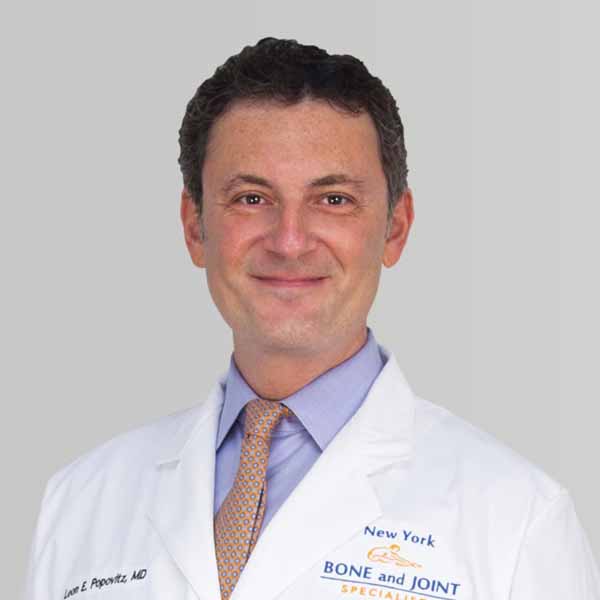





Medically Reviewed by Dr. Popovitz.
You can book your appointment with New York Bone & Joint online by submitting the appointment request form here:
Book an appointmentOur Locations
-

Upper East Side: Full Service Orthopedic Center & Walk-In
1198 3rd Avenue, Between 69th and 70th Street New York, NY 10021Monday–Friday: 9:00am–6:00pm
Saturday: 8:00am–5:00pm
Sunday: ClosedPhone: (212) 759-4553 -

Orthopedic Doctor Midtown Manhattan NYC — New York Bone & Joint Specialists
425 Madison Ave, Suite 200 (second floor) New York, NY 10017 (corner of East 49th Street)Physician appointments: Mon–Fri 8:00 am–6:00 pm
Physical therapy: Mon–Fri 7 am–7 pm, Sat 8 am–2 pmPhone: (212) 759-4553 -

Orthopedic Doctor Upper East Side NYC — New York Bone & Joint Specialists
130 E 67th St New York, NY 10065Tuesday & Thursday: 8:00am–6:00pm
All other days: ClosedPhone: (212) 759-4553